Showing posts with label Travel. Show all posts

Monday, January 30, 2017

Secrets and Magic: Kualoa Ranch of Oahu

Text and photos by Jason McKenney.

The fog hangs thick like a droopy blanket. The tops of the trees are shrouded in a gray mist that whispers your name, beckoning you towards the dark forest like a forest nymph. Little devils live in there. Waiting for you. They were waiting for me to ride an ATV across the lush, green valley while high mountain cliffs loomed over my shoulder. I was reminded of the scene from Jurassic Park where Dr. Alan Grant and the two kids are swarmed by a flock of speeding Gallimimuses. Kualoa was the location for several of the beautiful exteriors of Jurassic Park. Zipping through on an ATV, I imagined myself being chased by a T-Rex, chomping for my head. I was now at top speed, which was around 20 mph. No way I would be outrunning any giant meat-asauruses on this day.

My and my new friend.
Riding down the hillside and coming out from the low-hanging trees, I saw a large, brown face resting along the valley floor about fifty yards ahead of me. A replica Easter Island Moai, apparently created for a documentary filmed here, greets those who reach this point. Even wary of Raptor and Pterodactyl attacks, I paused for a moment to have a photo taken with the large face.

There is a hush on the valley floor. The green cliffs are like skyscrapers surrounding me on one side. The glory of the Pacific rolls out on the other. The whisper of a waterfall can be identified, probably coming from around the next bend. Another ATV pops out from the behind the trees. Are they on the tour as well . . . or are they chasing me? Best not wait to find out.

Mr. Ed takes a break.
My wife and I visited the Kualoa Ranch during a trip to the Hawaiian island of Oahu. The Ranch is a 4000-acre private nature reserve and working cattle ranch, as well as a popular tourist attraction and filming spot. The valley was a sacred location to ancient Hawaiians from the 13th to the 18th century. As written in the Kumulipo, an ancient Hawaiian genealogical chant, Kualoa is where Papa and Wakea buried their first still born child, Haloa. It is said that the first taro plant grew up from where Haloa was buried at Kualoa.

We marched through a jungle path that looked like an escape scene from Predator. Rough vines hung down from the trees and roots wove around our feet. We arrived at a small dock near the Moli'i Pond and the so-called Secret Island. We were near a flower farm and the tropical fish aquarium, but our objective was to reach another dock on the other side of the Secret Island. Fog floated lazily just above the water as if it were early morning on the Thames. Sea turtles could be seen relaxing just below the water's surface. Every once in a while one would pop up to say hello.

The Chinaman's Hat
Reaching the Secret Island, we transferred to a larger catamaran and set off for a journey around the Kaneohe Bay. Our eager captain led us out towards Mokoliʻi island, also known as "Chinaman's Hat" due to its curious, tilted shape. The boat ride normally looks over blue, shimmering waters under bright, sunny skies. On this February afternoon, the skies were cloudy and a thick marine layer still hugged the shoreline. A creepy, smoky atmosphere surrounded everything giving a unique view not usually captured in the promotional materials.

We grabbed lunch at the cafe inside the gift shop: barbecue pork, rice, macaroni, sushi, and Asian salad. We sat outside the gift shop at a picnic table that was being closely monitored by a few lazy cats. A skinny chicken walked around our feet in hopes of finding stray scraps.

Delicious Waialua Soda
bought at the cafe,
On the other side of the highway from the ranch entrance were a few men building a horse fence along the edge of a grassy field. They wore long-sleeve shirts, jeans and boots and were probably doing similar labor to what they did every day, whether tourists showed up or not. More than just a tourist spot, the ranch offers a peak into the lives of native Hawaiians who work the land, raise animals, and produce goods to earn a living. They do this in a place most outsiders don't think of as anything more than a vacation spot. In the midst of magical forests, secret islands, Hollywood, and tropical paradise, everyday people still work, struggle and look forward to going home in the evenings to be with their families.


The cliffs are moving.


Vivi prepares for the tour.

Approaching the Secret Island.

A cloudy day on the water.

Moving out into Kaneohe Bay.


A view of the Ranch from our catamaran.


A visitor looking for lunch.

Is that a T-Rex in the distance!

Tuesday, December 20, 2016

One Big Pool: San Alfonso del Mar in Algarrobo, Chile

Wide view of one end of the lagoon.
Text and photos by Jason McKenney.

When I was seven years old, my parents took me along on a family vacation to Disney World in Orlando. We were in Florida for a week. We rented a car and spent a day driving north along the eastern coast. We passed quiet, sandy beaches, void of many people. It must have been outside the normal tourist season because I remember it being desolate and empty. We visited Marineland and all I can remember is a fog rolling in and storefronts shuttered up. It was a very lonely feeling, yet still relaxing.

The heated pool rests under the
pyramid-like structure in the distance.
I had strange feelings of deja vu decades later when I made a visit to the San Alfonso del Mar resort in Algarrobo, Chile. I was with my wife and her parents. We were visiting in late February, the end of summer in South America. The series of large apartment complexes surrounding the famous pool are filled with vacationers during the summer high season, especially the few weeks right after Christmas. The buildings look like giant cruise ships paused at harbor. The pool is their ocean. Which is good because the real ocean beyond the lagoon is much to vicious for swimmers or surfers.

Rentals sit waiting for business.
The community of Algarrobo, an Arabic term meaning "the winds," lies about 30 miles south of Valparaiso along the coast of Chile. Inside this community is a private resort called San Alfonso del Mar. The resort has the world's second largest swimming pool, referred to as a lagoon. The new record holder is the 30 acres CityStars pool in Sharm-el-Sheikh, Egypt, built by the same company that built San Alfonso del Mar. The pool is over three thousand feet long and covers 20 acres. The water is pumped straight in from the Pacific, filtered, and treated. The lagoon was developed by Fernando Fischmann and his Chilean company, and it opened in December of 2006.

The lagoon and attached pools.
When we arrived I felt we might as well have rented out half the building. It was quiet. There were only a handful of people in the pool for our building. The lagoon was virtually empty. Each day that passed I noticed fewer and fewer sunbathers and swimmers. People were heading back inland, returning to school, going back to work. This left more space for us to lounge around the cabanas, believing ourselves to be powerful sultans vacationing in our private oasis. I had the pool to myself every day. For a small fee I went to the large heated (very heated) indoor pool and again had the entire space to myself save for a couple retirees who only sat under the small water falls having their back massaged.

Shot from the far side of the lagoon.
A tube bringing in treated water can
be seen in the depths.
I took my wife to one of the water-side restaurants by the lagoon and we were the only ones dining for lunch. There were several workers milling about, looking like they weren't sure how to fill their time. They leaned on the bar, wiping down the same spots over and over while gossiping about their love lives.

"It's end of season," said our waitress, a short, middle-aged woman named Myra. "Two weeks ago we were packed. This week it's dead. Many of us are seasonal. I'll be moving back north next week."

The beach beyond the lagoon.
There are a few people on the beach beyond the lagoon wall soaking in the sun and watching the blue water churn like a witch's cauldron. The waves pound the shoreline without mercy day and night providing great soundscapes for napping. The strong tide and fierce waves provide no safety for swimmers or surfers. These aren't waves that curl in slowly and can be ridden and tamed like the North Shore of Oahu. These waves simply roll up and crash straight down like hammers of Neptune. Anything that moves out beyond the break will be pulled down in an undertow or swept north in the strong tide. This part of the Pacific is Redondo Beach's morbidly drunk uncle. Captivating to watch, but deadly to challenge.

Water slide closed
until next season.
A large, curling water slide stands near one edge of the lagoon. I found out that it stopped running the previous week. It was now shut down for the winter. Kiyaks, however, were still in season. We rented one and paddled out across the lagoon. Swimming is verboten in the lagoon, but there are plenty of other activities that can be enjoyed: water trampolines, peddle boats, SUP boarding, and even available rentals of small sailing canoes.

If one enjoys competing for resources, being surrounded by the masses, and feeling like being in the middle of the action, showing up at San Alfonso in December and January is the time to go. If one prefers to have more space, more peace, more solitude at the expense of an occasional amenity not being available, show up in late February and the world is your oyster.


Loading dock for boats to be released into the lagoon.


A warm day in Algarrobo.

Another view across the lagoon.

Paddle boats make there way across the lagoon. Swimming is forbidden in the lagoon to allow for boats and kiyaks, but
each complex has its own swimming pool set along the edge of the lagoon.

Making the long walk around the perimeter of the lagoon, a distance of nearly 2 miles.


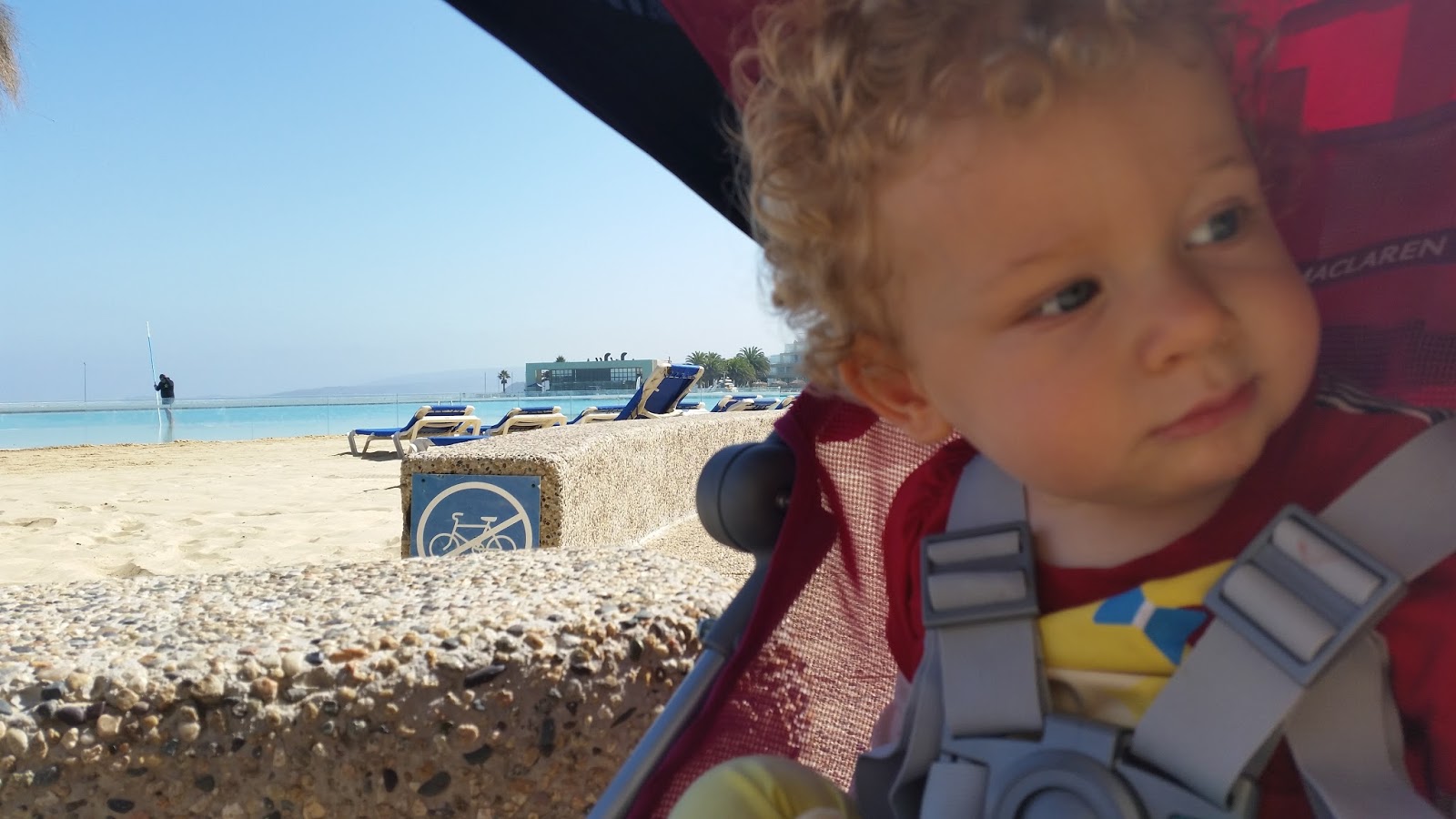
Frankie enjoys her stroller ride.

Business is slow.

Some interesting graffiti on the water pumps that feed the lagoon.


Monday, December 5, 2016

Long After Death: A Gettysburg Ghost Tour

A Harvest of Death by
Timothy O'Sullivan. Maintained at
the Getty Museum in LA
A three day battle resulting in 50,000 casualties including 8000 American lives lost. 165,000 troops, 653 cannons, and more than 46,000 horses and mules were used between both sides. Still the legends of those who fought and the battlefields they bled on loom larger than even these staggering numbers. The names and places are iconic: Robert E. Lee, Joshua Chamberlain, The Irish Brigade, Little Round Top, Pickett’s Charge. Like many Americans, I’ve been infatuated with the Civil War since I was a kid, and although I was born and raised less than a day’s drive from the battlefield, it wasn’t until I was in my early 30s and living in California before I finally made plans to visit the historic site of Gettysburg in Adams County, Pennsylvania.

I was making some routine plans to visit family in Kentucky during the month of May when I decided to tack on a three day side trip to Gettysburg prior to arriving in the Bluegrass. I took a Delta flight into Harrisburg, PA, where I rented a slick, black Dodge Challenger, driving it the remaining 40 miles south to Gettysburg.

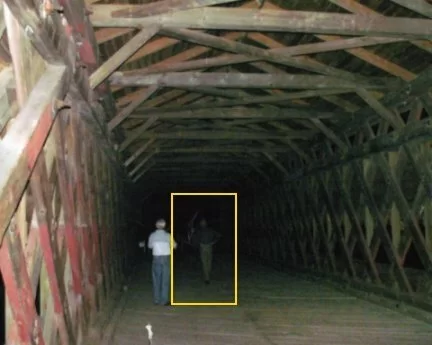
Image in Sach's Bridge
from Destination Gettysburg
Several weeks prior to my trip I did a little research online to find a good hotel near the battlefield and found out the town is peppered with inexpensive little bed and breakfast houses decorated in lovely old-fashioned Americana and serving delicious local dishes: fried chicken, pot roast, dumplings and gravy, boiled greens, apple pie. I made reservations for two nights at a peaceful and well-kept B&B called The Gaslight Inn located near what would be considered “downtown” Gettysburg.  It’s within walking distance of the battlefields, but to really enjoy your visit a set of wheels is a must.

Instead of doing a blow by blow of the traditional tourist spots at Gettysburg, I want to describe one of my more memorable experiences from the trip which was my evening with a group of ghost hunters on a haunted tour of the battlegrounds with the celebrated Miss Betty. Miss Betty’s ghost tour was recommended to me by the hostess of the Gaslight Inn and I quickly called her up and made a reservation at my first opportunity.

Another photo from Sach's Bridge of
a figure.  Photo from Dark Shadows
Ghost Tours.
The next night, a small group of maybe ten ghost hunters met up with Miss Betty in the nearby elementary school parking lot. We packed into a small caravan of three cars led by Miss Betty towards the outskirts of town where the old Sachs Covered Bridge straddled across Marsh Creek. Since I was the only person who arrived solo I rode with Miss Betty in her little car where I discussed with her my desire to witness any sort of supernatural phenomenon even though I was a devout skeptic. This point of view stoked her interest and she would check in with me periodically throughout the rest of the evening to see if I had been convinced by anything I had witnessed.

Sachs Bridge is a one hundred foot lattice truss structure straight out of a Sleepy Hallow nightmare. You can almost hear the slowly swinging nooses stretching down from the dark rafters, tickling the back of your neck as you walk through the dusty tunnel. Our investigation here lasted through dusk and was accompanied by several ghost stories from Miss Betty. The anecdotes ranged from various atrocities taking place around the bridge during the battle to local children seeing spirits marching up the nearby road just a few months prior.

We were also encouraged to take pictures throughout the evening because it was near these spiritual epicenters where floating orbs and spectral manifestations would miraculously appear in photos even when they may not have been visible in person. I took lots of photos with my Canon XT. I never captured any of these orbs.

Zach Bagans visits Gettysburg.
Via Travel Channel.
We made two more stops during the tour: a visit to a forsaken gazebo near a haunted inn (which was possibly built next to a mass grave) and a field next to the public school where several Confederate soldiers from Louisiana had been massacred. The eeriness of the locations, the sweet but pungent odor of the ripe Pennsylvania grass, and the haunting tales weaved by the charismatic Miss Betty provided for an unbelievably entertaining and inexpensive evening ($15 after the Gaslight Inn discount).  If you go on your own you may even be able to ride along with Miss Betty as she drives from site to site. This woman knows her history of the battlefields, not just the ghost stories but the traditional textbook stuff as well. There also seems to be some limitations enforced by park rangers with regards to people being out and about the battlefields after dark, and the official ghost tours are a great way to be driving through the park at night without being harassed by security.

Ghosts or not, the appearance on the stone faces of the life size statues that stand like sentinels around the park is enough to make your throat go dry. Moving shadows caused by passing low beam headlights gliding across their cheeks and noses like spirit dust as their cold eyes stare off into the eternal beyond, this alone is worth the price of admission. Its wonderful theater and you know for a fact that all those years ago hundreds of men may have been blown to bits right where you are now standing, some vaporized in a red mist of sanguinary termination thanks to cannon fire. Such thoughts do make one pay close attention to their immediate surroundings.

Maj. Gen. Meade Monument
Prior to going to Gettysburg I felt I had a better than average understanding of the battle itself.  I had read several focused works on the encounter as well as the entire trilogy of Shelby Foote’s Civil War including a recent re-reading of his Stars in Their Courses. I had watched the “Gettysburg” episode of the Ken Burns documentary four times, and I had even viewed the Ronald Maxwell film Gettysburg made in 1993 starring Tom Berenger and Martin Sheen.

For those two days I was in Gettysburg prior to taking the ghost tour I covered as much of that field as a person possibly could with self-guided tours, official bus tours, hiking on foot, and driving my grumbling Challenger all around the park. I felt I had a firm grasp of the traditional image and understanding of those three brutal days in July. But it was those brief treks on my final night there, roving back and forth from one haunted spot in the park to another with a full moon overhead, those empty stone eyes watching our every move that provided a different perspective of the area that I wasn’t quite anticipating.

Miss Betty
Standing in silence in that open expanse, the stars beaming down, the solitude of the moment. If you let your mind wander you can imagine the worried parents of these young men waiting back home for hopeful news. Wherever home might be: Tennessee, Michigan, New Jersey, Virginia. Waiting for word that their son is still alive, that the war is over, that life will once again go on as it had before. But that word won’t come. Their son will die, painfully, in agony, along with thousands of others in the hope that this nation would stay united. Standing there under the stars with my mind flying through these images like a scene from Siddhartha, it is only then that the battle becomes real to me and not just words in a book or actors on a screen.

“Have I convinced you at all in the existence of spirits, Jason?” Miss Betty asked as we were about to part our ways at the end of the evening.  I told her no, unfortunately, but I still had a hell of a time and that I would highly recommend her to anyone I knew who would be visiting the park. Sometimes an unconventional method of viewing something that we thought we already understood can reveal something new. They might not quite be ghosts, but subtle details and different insights that we never knew existed can suddenly appear.

Wednesday, November 30, 2016

A Natural Beauty: Capilano River Park, British Columbia


Text and photos by Jason McKenney

Before ever arriving in Vancouver, I associated the Canadian city with environmentalists and nature hippies for some reason. Maybe due to its natural beauty and reliance on sustainable fishing and logging. Or maybe it was based on my childhood memories of watching Danger Bay episodes and being exposed to such great views of the Pacific Northwest and life on the water. Either way I didn't find it too shocking when our tour guide through Vancouver's Capilano River Regional Park was a middle-aged German immigrant named Michael who wore a brown scout's uniform and who was also a self-described hippie who loved the great outdoors.

"What better job is there for a hippie than to guide people through an ancient forest," he posed. "Are there brownies? Are there spirits in these woods? It's possible. This forest contains as much magic as you'll find anywhere else in Canada."

The park actually sits on the nothern side of Vancouver Bay from the city of Vancouver. Our tour bus followed the 99 North across the bridge connecting the famous Stanley Park to Capilano. We stopped near the fish hatchery where most tours begin.

One of the more intriguing sights at the river park is the Cleveland Dam where one can walk across the top and observe the spillway and the river that cuts through the tall trees and rocky canyon below.

Formed above the dam, Capilano Lake stores the river's waters, stretching north for nearly 3 miles. The lake currently supplies forty percent of the region's drinking water. The large salmon hatchery is about 500 meters downhill from the dam. The hatchery offers educational displays explaining the type of work that is done there, as well as basic education about the life cycles of the fish in the area. There is also a cross-section display of an active fish ladder. During spawning seasons, the fish ladder is heavily used by fish in the area that use it to bypass the dam.

"The old growth of the forest needs to be protected," said Michael, leading us on a fascinating hike through the woods, "but not too much."

He told us the story of a group of young tree-hugging hippies (apparently not as wise as himself) who held hands encircling one of the largest fir trees in the area (a tree named Granpa) in an attempt to give love and good vibes to the plant. What they didn't realize is that by standing so close to the tree, they were packing down the dark soil around the base of the tree which prohibits moisture from seeping down to the roots. By loving the tree they were effectively killing it. Silly hippies.

There were moss-covered trees everywhere. Mostly firs and cedars. Some estimated at nearly 1000 years old. Others are much younger and are growing up right from the dead trunks of their fallen comrades.

"The moss and mist build up on the rotting trunks over time," said Michael, "and a seed finds purchase and within a few years, voilà! A baby tree." Some of the trees are growing right out of the sides of the canyon where seeds have taken root between the cracks.

The rugged waters of the Capilano River also attract kayakers and canoers. The views in the river canyon are stunning. A man was standing up along a rocky ravine tossing out his fishing line in hopes of catching a whopper. Further down the river, two kayakers were paddling their way south towards the high suspension bridge that crosses overhead. The summits of Hollyburn and Crown Mountains, looming in the distance, were snow-capped and magisterial, awaiting serious climbers.

People say California is blessed with natural beauty: the beaches and mountains and wonderful weather. Vancouver is not far behind. Having easy access to the Pacific, the large bays, and the well-preserved River Park means there is a lot to explore and a variety of habitat to learn about. "I visited the forests here when I was younger and I never left," said Michael. Taking a look around it was easy to understand why.


The salmon hatchery


Waiting for the fish to grow