Showing posts with label South America. Show all posts

Thursday, December 22, 2016

La Ley at the Sun Monticello, Chile

Stage right. Far right.
Text and photos by Jason McKenney (except where indicated).

The first time my wife introduced me to the music of Chilean rock band La Ley, I yawned and asked her why they had a Hawaiian name (La Ley is actually Spanish for "The Law"). After hearing more of their songs on subsequent road trips, their catchy hooks and indie rock sound eventually began to win me over. Chilean bands have a throwback vibe to them, reminding me of how pop-rock music used to be played in the US back when bands could actually play their own instruments and didn't rely on dance moves and high production to catch someone's interest.

During a visit to Chile, my wife's cousin, Andy, had tickets to see La Ley perform at the Sun Monticello Grand Casino in the town of San Francisco de Mostazal. The casino is about an hour south of Santiago. Andy brought his girlfriend Susan, and me and my wife made four. We arrived early and found a pizza joint inside the mall attached to the casino. The mall area is filled with boutique stores, video game arcades, and a number of business fronts that cater to kids. Even after the concert, approaching midnight, I was impressed with the number of young children I saw running around playing games, eating pizza, and revelling in their weekend.
Outside the casino.

"It's Chile. Kids here stay up later," was the simple explanation my wife gave me.

Attached to the mall, beyond a series of glass double-doors, is the casino. Within the casino, not too different than what one might find in some of the smaller Vegas hotels, is a music stage setup inside a large ballroom. Being a ballroom, the seating wasn't part of a permanent structure. Chairs were setup on the floor one-by-one like a family reunion. Chairs were set up to match the tickets sold. Our tickets were for the front row just right of the stage. When we arrived, there were people sitting in two of our seats. They were two women dressed in tight tops and short skirts. An older gentleman working for the venue told us there was a mishap with the tickets and duplicates of the same seat number had been sold. Since the two women had large, half-bared breasts and Andy and I didn't,
the gentleman said we had to sacrifice our seats.

"There are plenty in the back that are empty," he told us.

My wife and Susan stayed in their seats, but and Andy and I moved to the back where several unused chairs sat cold and vacant.

"Doesn't seem fair," I said to Andy while we were out in the lobby grabbing drinks. "Why not just put down another couple of chairs and extend the row? I saw them doing that earlier."
Show's on! Phones up!

Andy didn't seem too phased by it. "It's Chile, man."  Andy works in promotions. He has already seen La Ley play more times than he can count. Tonight was for me and my wife as a treat on our visit.

Prior to the show I had been a moderate fan of the group. After the show, I would put La Ley down as one of my favorite bands. That happens when you see a talented band play live. There is something special about live music, about sharing it with a crowd, with friends, at an event.

La Ley formed in 1988 in Santiago. Their first official studio album was released in 1991. The grew in popularity in Chile, Argentina, and even Mexico during the early 90s. In 1995, their popularity expanded with the release of the hit album Invisible. They continued to release albums and tour until 2005 when they decided to call it quits. They made a return in 2013, but in August of 2016 it was announced that they were breaking up again. Will it be for good this time? Time will tell.


Publicity image of La Ley from BoomOnline.


Tuesday, December 20, 2016

One Big Pool: San Alfonso del Mar in Algarrobo, Chile

Wide view of one end of the lagoon.
Text and photos by Jason McKenney.

When I was seven years old, my parents took me along on a family vacation to Disney World in Orlando. We were in Florida for a week. We rented a car and spent a day driving north along the eastern coast. We passed quiet, sandy beaches, void of many people. It must have been outside the normal tourist season because I remember it being desolate and empty. We visited Marineland and all I can remember is a fog rolling in and storefronts shuttered up. It was a very lonely feeling, yet still relaxing.

The heated pool rests under the
pyramid-like structure in the distance.
I had strange feelings of deja vu decades later when I made a visit to the San Alfonso del Mar resort in Algarrobo, Chile. I was with my wife and her parents. We were visiting in late February, the end of summer in South America. The series of large apartment complexes surrounding the famous pool are filled with vacationers during the summer high season, especially the few weeks right after Christmas. The buildings look like giant cruise ships paused at harbor. The pool is their ocean. Which is good because the real ocean beyond the lagoon is much to vicious for swimmers or surfers.

Rentals sit waiting for business.
The community of Algarrobo, an Arabic term meaning "the winds," lies about 30 miles south of Valparaiso along the coast of Chile. Inside this community is a private resort called San Alfonso del Mar. The resort has the world's second largest swimming pool, referred to as a lagoon. The new record holder is the 30 acres CityStars pool in Sharm-el-Sheikh, Egypt, built by the same company that built San Alfonso del Mar. The pool is over three thousand feet long and covers 20 acres. The water is pumped straight in from the Pacific, filtered, and treated. The lagoon was developed by Fernando Fischmann and his Chilean company, and it opened in December of 2006.

The lagoon and attached pools.
When we arrived I felt we might as well have rented out half the building. It was quiet. There were only a handful of people in the pool for our building. The lagoon was virtually empty. Each day that passed I noticed fewer and fewer sunbathers and swimmers. People were heading back inland, returning to school, going back to work. This left more space for us to lounge around the cabanas, believing ourselves to be powerful sultans vacationing in our private oasis. I had the pool to myself every day. For a small fee I went to the large heated (very heated) indoor pool and again had the entire space to myself save for a couple retirees who only sat under the small water falls having their back massaged.

Shot from the far side of the lagoon.
A tube bringing in treated water can
be seen in the depths.
I took my wife to one of the water-side restaurants by the lagoon and we were the only ones dining for lunch. There were several workers milling about, looking like they weren't sure how to fill their time. They leaned on the bar, wiping down the same spots over and over while gossiping about their love lives.

"It's end of season," said our waitress, a short, middle-aged woman named Myra. "Two weeks ago we were packed. This week it's dead. Many of us are seasonal. I'll be moving back north next week."

The beach beyond the lagoon.
There are a few people on the beach beyond the lagoon wall soaking in the sun and watching the blue water churn like a witch's cauldron. The waves pound the shoreline without mercy day and night providing great soundscapes for napping. The strong tide and fierce waves provide no safety for swimmers or surfers. These aren't waves that curl in slowly and can be ridden and tamed like the North Shore of Oahu. These waves simply roll up and crash straight down like hammers of Neptune. Anything that moves out beyond the break will be pulled down in an undertow or swept north in the strong tide. This part of the Pacific is Redondo Beach's morbidly drunk uncle. Captivating to watch, but deadly to challenge.

Water slide closed
until next season.
A large, curling water slide stands near one edge of the lagoon. I found out that it stopped running the previous week. It was now shut down for the winter. Kiyaks, however, were still in season. We rented one and paddled out across the lagoon. Swimming is verboten in the lagoon, but there are plenty of other activities that can be enjoyed: water trampolines, peddle boats, SUP boarding, and even available rentals of small sailing canoes.

If one enjoys competing for resources, being surrounded by the masses, and feeling like being in the middle of the action, showing up at San Alfonso in December and January is the time to go. If one prefers to have more space, more peace, more solitude at the expense of an occasional amenity not being available, show up in late February and the world is your oyster.


Loading dock for boats to be released into the lagoon.


A warm day in Algarrobo.

Another view across the lagoon.

Paddle boats make there way across the lagoon. Swimming is forbidden in the lagoon to allow for boats and kiyaks, but
each complex has its own swimming pool set along the edge of the lagoon.

Making the long walk around the perimeter of the lagoon, a distance of nearly 2 miles.


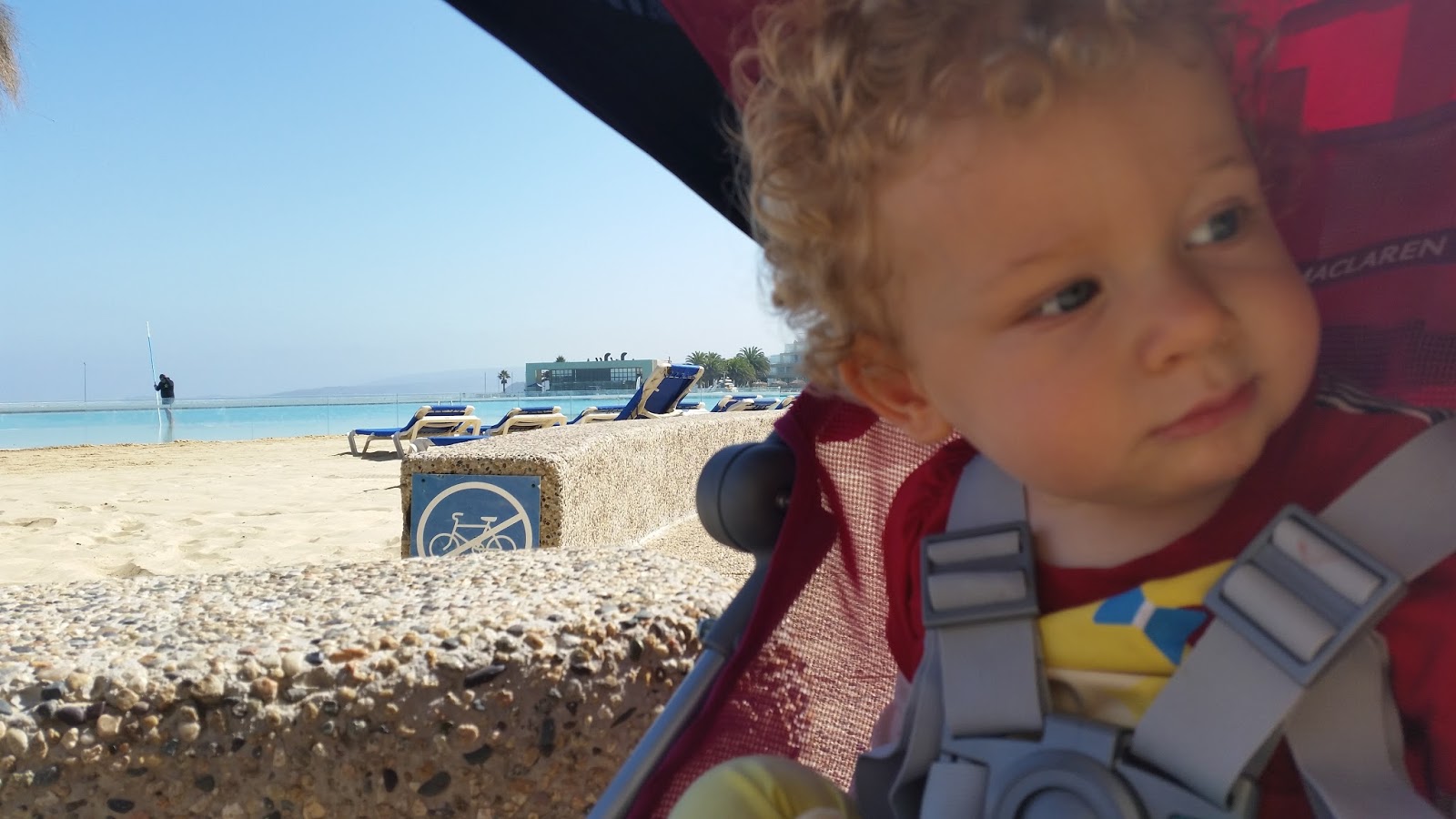
Frankie enjoys her stroller ride.

Business is slow.

Some interesting graffiti on the water pumps that feed the lagoon.


Monday, December 12, 2016

Love & Tradition: A Jewish Wedding in South America

The chuppah inside the sanctuary
The synagogue was like a compound. A fortress of protection from the cold South American winter outside. The place of worship is a large, modern structure protected behind thick walls and an iron gate. The inner sanctuary was cloaked in red and cedar and provided a warmth completely diametrical to the stone chill outside.

I was attending the wedding of my wife's cousin. The wedding took place in Santiago, Chile, so would be conducted entirely in Spanish along with Hebrew prayers.

Presentation of the couple
Filing into our pew and taking a seat, a kippah atop my head, I found a greeting from the bride and groom on rolled parchment welcoming us to their special day. Other friends and family members
shuffled in. Older people, young families, small children dressed in their celebration best. The sanctuary slowly filled to capacity.

The stated time of the wedding came and went. It was like being at a Kanye concert. Nearly an hour late, the groom, a young lawyer named Danny, made his way to the chuppah, the marriage canopy that reminded me of a pleasant pergola draped with a white sheet on the stage at the center of the sanctuary. Danny wore a kittel, a customary white cloak, over his dark suit. The blushing bride, my wife's cousin Josie, was escorted to the chuppah by her sister and mother.
Pre-dinner reception

The chuppah represents the home the couple will create together, and the Divine Presence under which they will be married. The remainder of the ceremony took place under the chuppah, guided by a smiling Rabbi who did his best to ease the nerves felt by the young couple with both wit and warmth.

Danny lifted the veil over Josie's face, verifying that it was indeed this woman he intended to marry. The groom then replaced her veil, reciting the blessing "Our sister, may you be the mother of thousands of ten thousands" (taken from Genesis 24:60), words first uttered by Rebecca's mother and brother to her as she left her home to marry Isaac.

First dance
After her verification, Josie circled around the groom seven times, the hems of her dress held up by both Danny's and Josie's mothers. This symbolically makes Danny the center of Josie's life. The custom comes from the verse in Jeremiah 31:22: "A woman shall compass (go around) a man."

A series of blessings were then recited by the Rabbi and his assistant. The first two blessings -- one over the wine and the second solemnifying the betrothal -- represented the first part of the ceremony. Next, two witnesses were called; they examined the wedding band to be sure that it met standards of Jewish law, namely being of one piece and without embedded stones. Danny placed the ring on his bride's index finger and formally declared her to be his wife.
Let the party begin!

The Rabbi presented the couple to the audience, briefly described the traditions and meanings of the ceremony for those Gentiles among them, and sang the blessings that have been passed down for centuries. The ketubah, the Jewish prenuptial agreement, was read by the Rabbi. The groom then handed it to the bride for keeping.

The seven blessings that were then recited are among the most sentimental and beautiful of the Jewish liturgy, and are unparalleled expressions of joy. In a tradition at least 800 years old, the groom breaks a glass by stepping on it, symbolically remembering the destruction of the Temple in Jerusalem, destroyed by the Romans in the year 70 AD.
The bride and her girls.
Danny being tossed to the right.

The ceremony is over. With cheers and applause, the couple were escorted from the sanctuary and the reception would soon begin with cheers of Mazaltov!

After the ceremony, while still standing in the sanctuary, Josie's father, brother, and a couple other male relatives met to share the remainder of the wine used during the marriage. I was honored to be included in this brief custom, enjoying the wine straight out of a large golden chalice.

The wedding dinner took place in a wide banquet hall in the basement of the synagogue. Dozens of round tables surrounded a stage and dance floor. Musical numbers were performed by a local band headed by two lead singers, a man and woman, who covered a wide range of popular favorites, in both Spanish and English.

The raucous rhythms of Hava Nagila blasted loudly when Danny arrived. He and his friends danced in rapid circles, tossing Danny in the air, ties flapping, jackets flying, an amazing explosion of joy and celebration.
The men dancing in circles.

My rusty Spanish skills proved to be no barrier to enjoying this party. Love and joy transcend language, religion, and culture. The food was good. The music was better. And I look forward to seeing Danny and Josie enjoy their new life together.


The band provides a steady stream of pulsing rhythms. 

Heading late into the night...

Joining in a selfie with Josie the bride (front), her brother Andy and Andy's girlfriend. 

Thursday, October 27, 2016

Feeling Lazy: Walk Along Avenida Costanera, Chile


Text and photos by Jason McKenney

The quiet Avenida Costanera runs along a magnificent stretch of beach in Algarrobo, Chile. Roughly sixty miles south of Valparaiso, this soft, sandy beach looks out over a deep blue Pacific that hides some treacherous riptides below. Because of that you may not find many swimmers or surfers. The beach is generally vacant depending on the season and makes for a quiet getaway for a lazy afternoon.

Up the street is the A Todo Costa restaurant that has patio seating along the beach. Volleyball nets are setup in the sand nearby. After some fresh seafood and sipping a couple pisco sours, a stroll along the beach sounded quite appealing.

I have walked along this beach twice, both times in the late summer season (Feb-March in the Southern Hemisphere) and I hardly saw a soul either time. It’s tucked behind a small neighborhood just off the roadway referred to as G-98-F. The Avenida Costanera is a narrow, bumpy road covered with dust and faded memories. When traffic is light (which is most of the time) it’s easy to park by the sidewalk and step out for a promenade.

A small junk food stand rests along the sidewalk. A young girl stands outside eating a candy bar. Her mom runs the stand. They sell candy and gum, ice cream and cheap toys. I haggard-looking dog rests in the shade of the stand panting a mile-a-minute.

Your choice of treats
The rolling crash of the giant waves echo across the warm sand. It’s a sound that relaxes my tense shoulders. There are a couple sunbathers lying on the beach. A young family walks by enjoying the gorgeous day, but there is plenty of space for all of us. We might as well be on our own desert island. There are no sounds of traffic, no chattering tourists, no annoying radios. Nothing but the waves and the trills of seagulls. Thankfully I have a beach towel because that sand sure does look inviting.


Lovely.

Tuesday, October 25, 2016

Biodynamism! The Emiliana Winery of Chile


Text and photos by Jason McKenney

"One breed of plant can be used fend off another that's intruding. Certain flowers attract specific insects needed to destroy a fungus that can kill the vines. Bugs provide food for the birds. The birds help spread the seeds of the plants. Pesticides and herbicides are never used." The tour guide, a plucky young woman called Meredith, was explaining to us the details of what makes a winery not just organic, but biodynamic.

The basics are as follows: "Organically Grown" means the grapes are grown without the use of pesticides, herbicides or chemicals. That's pretty standard and most people are familiar with the term.
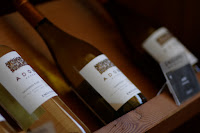
Bottles of Adobe Reserva
Being "biodynamic" means not even synthetic chemical fertilizers are used and a variety of natural preparations are applied to the vineyard in conjunction with the cycles of the moon and changes in season.

According to Meredith, "Being biodynamic is a holistic and biodiverse approach that regards the vineyard as a living thing that needs to be naturally nourished." This is about as close to nature untouched as one can get and still ferment something delicious.

When hoping to become a body builder, anyone can lift weights and become stronger, but only those with the optimum set of genes will attain award-winning results. Similarly, any vineyard can attempt to be organic but only those with the best natural conditions will excel to generate world-class wines. Exhibit A is Emiliana Organico in the Casablanca and Calchagua Valleys in Chile.

The Casablanca location (where we were on this day) is situated between Santiago and the Pacific Coast while Calchagua lies roughly 80 miles south of Santiago. The Casablanca region boasts some of the best wineries in Chile. With warm, dry days, cool evenings, and moderate rainfall, the climate is uniquely well suited to organic farming and provides a wonderful canvas from which wine makers can create their art.
A biodynamic environment

Emiliana was founded in 1986. Not every wine is yet certified biodynamic as owners continue to convert as many of their vineyards as possible to this rigorous approach. Their super-premium Emiliana Gê and Coyam are both made in accordance with biodynamic principals. Gê's debut
vintage was 2003. It marked the release of South America's first ever certified biodynamic wine. As of today, Emiliana constitutes the single largest source of estate-grown organic wines in the world.

Herb garden
I was visiting the winery with my wife, father-in-law, and sister-in-law. Prior to taking a guided tour of the grounds, we gathered around a long table on a shaded patio with several other visitors and tasted several of Emiliana's best offerings.

Coyam is a red blend (41% Syrah, 29% Carmenere, 20% Merlot, 7% Cabernet Sauvignon, 2% Mourvedre, 1% Petit Verdot) with soft tannins and tasting of red fruit interlaced with oak and toffee. Average price per bottle is around $27 US.

Gê is Emiliana's best offering. The varietal blend runs 40% Syrah, 30% Cabernet Sauvignon, 30% Carmenere creating intense aromas of black berries with mineral notes. The taste is rich with fruit and a hint of cedar.

As opposed to the Emiliana vineyards in the Calchagua Valley, the vineyards in Casablanca specialized in growing grapes for white wines. Their Natura Chardonnay is well balanced, a bit citrusy, and certified organic.

A much better breakdown and analysis of Emiliana's wines than I could ever give can be found on the Wine Lover's Page.

Each glass given to us was a full serving and was paired with a local cheese and some crackers. This was my first wine tasting outside the United States so I wasn't used to the apparent custom of not actually finishing a glass. After downing three glasses of wine I looked around the table and noticed that mine were the only glasses that were empty. My wife, a native of Chile, found this hilarious. "These are tediously constructed wines with immense amounts of effort put into the crafting of each bottle," I explained to her (or something along those lines). I felt it a sin against nature to waste even one drop.

The tour of the farm and vineyard helped me walk off some of my buzzed energy. Meredith showed us not only the vineyards, but the herb garden, the bee hives (don't get too close!), the fruit orchard, and some of the barnyard animals that call Emiliana home. A white alpaca walked up to a stone fence next to me and basically demanded I give it some leaves to eat.

Seeing Emiliana up close pulled together many of the staples of wine making that I love, namely, being self-sustaining, blending with the environment, and crafting something beautiful and pleasant by controlling the whims of nature. The winemakers at Emiliana are devout in their faith of being biodynamic and I look forward to testing (tasting) the results of their labor for years to come.


Saturday, September 24, 2016

Cab Ride on the Nueve de Julio, Buenos Aires

Singing on the streets
Dispatch from Buenos Aires, Argentina
Text and Photos by Jason McKenney

The four of us jumped into the rickety green cab with the balding tires, packing in hip-to-hip like Greeks in a wooden horse, me and my wife, her cousin and his girlfriend. The inside smelled faintly of cigar smoke and stale cologne. Our driver, a pudgy man with sagging eyes who I believe was named Carlos, sped off with a jolt, merging into the stream of traffic like a fat salmon searching for home. We had left the Palacio Duhau Park Hyatt Hotel in the Paris-esque neighborhood of Recoleta, our souls brimming with excitement and our bellies warm with espresso, jovially buzzing along the 9 de Julio Avenue, a road that demands to be seen and savored by all who tread upon her.

While being informed by Carlos, slim cigarillo perched gently in the corner of his mouth, that 9 de Julio is the widest avenue in the world (7 lanes each way!) I realized that his gas tank was empty. The needle was at the bottom and the orange warning light was on. Strange enough, that wasn’t the first time I had noticed such a warning in consoles of these Buenos Aires cabs. “Gas is full. Needle is broke,” was the explanation we were given. “All is fine!”

Tango dancing in the square
The 9 de Julio is named after the day of Argentina’s independence in 1816. It runs past a number of beautiful historical sites in one of the more eclectic and scenic areas of Buenos Aires. “On the right you’ll see the French Embassy, an architectural masterpiece,” said Carlos (Travel Tip: Best to travel to Argentina if you know Spanish or if you travel with someone who can translate for you). “There is the Teatro Colón, considered one of the top opera houses in the world by those who know. Very beautiful.”

Both the Teatro and the Embassy building are splendid examples of the châteaux style of French architecture also showing tendencies from the Italian Renaissance. Sturdy block foundations, slate roof tiles, bronze and iron work, and beveled lead crystal window panes dominate the exterior. Stout, firm, immovable. The interior of these buildings are decorated luxuriantly with marble staircases, hand-crafted boiseries, chandeliers with lead crystal prisms, glass lamp shades, and ornate gilded mirrors. But we have no time to stop now. On we go, darting from lane to lane, passing busses, avoiding bicyclists, my eyes as wide as the Lincoln Tunnel in an attempt to take in everything as we progress.

“The Obelisk. Built in 1936 in honor of the 400 hundredth anniversary of the initial founding of the city. As great as anything you’ll see in Europe.” The structure is actually a near replica the Washington Monument, just 2-and-a-half times smaller. Carlos was correct, the architecture was quite stunning and appeared the equal of anything that Marseille or Florence could offer, but what increasingly began to capture our attention was the bubbling crowds of loud protesters gathering along the grassy medians and around nearly every intersection.
Monument to Giuseppe Garibaldi

Latin America has always held mixed emotions for me. It’s a place steeped in history, beauty, and color, but it’s also a place of great aggravation for many of its citizens who sometimes live in downright squalor thanks to the rampant hubris and vanity of their fearless leaders. With a tradition of “reform” and “justice” punctuated by charismatic archetypes like Ché, Castro, Allende, and Chávez, South America is replete with power-hungry leaders who have convinced much of the lower classes that they are fighting for them when they are actually using them for political leverage. Public protests become more common in places where the national leadership spends so much time micro-managing options available in the daily lives of the people, whether it be opening a small business or being able to purchase toilet paper. I would have been very disappointed to fly all the way to Argentina and not see at least one loud protest.

“What are they protesting?” asked my wife’s cousin, Ande. We were all mesmerized by the loud chanting, colorful banners, playing of drums and horns, the banging of pots and pans. This is what the locals refer to as a cacerolazo, or a good ol’ fashioned pot-banging protest. Thankfully, the crowds were peaceful and orderly and kept out of the way of traffic. Carlos, both a pundit and a cynic, informed us why these people were putting on such a good face for the numerous news vans that were hovering around them.
A curious art bus

“These protesters have all been paid for by the President [of Argentina, Cristina Fernández de Kirchner, recently replaced by Mauricio Macri], and they’ve been bused in for a show of support for her before the cameras.” According to Carlos, much of the Argentine public stands against the President due to her poor economic record and growing distrust with the populace. “The tax payers are funding this circus against our will,” said Carlos. “Our money goes to pay for these protesters to create a façade for the rest of the world to see, and they will think all of Argentina stands in support of the President.”

Carlos went on to claim the politicians are engaging in an ongoing campaign to get rid of the middle class in Argentina, particularly in Buenos Aires. The upper class will be soaked for taxes while the lower class will be soaked for votes. The middle class serves little purpose for politicians whose primary goal is to gain and retain power. A suspicious view, yes, but the passionate arguments made by the locals can sound persuasive.
Japanese Garden of BA

In 2008, Kirchner created conflicts with the agricultural sector of Argentina due to her administration’s new taxation system. Protests erupted throughout the countryside. In 2009, it was discovered that her personal assets had increased seven times over in just the six years since her inauguration. Allegations of impropriety swelled and bellowed. In 2012, hundreds of thousands of citizens met in various cities around the nation to protest poor economic policies that had led to an astounding 25% inflation rate that year alone. When I arrived in Buenos Aires in 2014, the market for $US was so great that one could exchange greenbacks on the street for anywhere from 30-50% more Argentine pesos than the official exchange rate. These bonus pesos were referred to affectionately as “blue dollars.”

Taking a seat at the
Museum of Modern Art
If there was ever a way to “experience” Buenos Aires in just twenty minutes, a cab ride along the 9 de Julio is probably the closest a visitor can get. Between the buildings, the landmarks, and the people, a tourist can dip their feet into the dark and swirling waters of a nation filled with conflict, strife, passion, and culture. A place that revels in its European roots while pushing to assert itself as a leader in Latin America. But the ride is short-lived and my stomach is now rumbling. Turning off 9 de Julio, we continued on our way to the neighborhood of San Telmo to have lunch at a world class steak joint called La Brigada. I hear they love their bovine so much that even their menus are made of furry cowhide.