Tuesday, October 25, 2016

Biodynamism! The Emiliana Winery of Chile


Text and photos by Jason McKenney

"One breed of plant can be used fend off another that's intruding. Certain flowers attract specific insects needed to destroy a fungus that can kill the vines. Bugs provide food for the birds. The birds help spread the seeds of the plants. Pesticides and herbicides are never used." The tour guide, a plucky young woman called Meredith, was explaining to us the details of what makes a winery not just organic, but biodynamic.

The basics are as follows: "Organically Grown" means the grapes are grown without the use of pesticides, herbicides or chemicals. That's pretty standard and most people are familiar with the term.
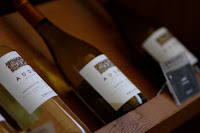
Bottles of Adobe Reserva
Being "biodynamic" means not even synthetic chemical fertilizers are used and a variety of natural preparations are applied to the vineyard in conjunction with the cycles of the moon and changes in season.

According to Meredith, "Being biodynamic is a holistic and biodiverse approach that regards the vineyard as a living thing that needs to be naturally nourished." This is about as close to nature untouched as one can get and still ferment something delicious.

When hoping to become a body builder, anyone can lift weights and become stronger, but only those with the optimum set of genes will attain award-winning results. Similarly, any vineyard can attempt to be organic but only those with the best natural conditions will excel to generate world-class wines. Exhibit A is Emiliana Organico in the Casablanca and Calchagua Valleys in Chile.

The Casablanca location (where we were on this day) is situated between Santiago and the Pacific Coast while Calchagua lies roughly 80 miles south of Santiago. The Casablanca region boasts some of the best wineries in Chile. With warm, dry days, cool evenings, and moderate rainfall, the climate is uniquely well suited to organic farming and provides a wonderful canvas from which wine makers can create their art.
A biodynamic environment

Emiliana was founded in 1986. Not every wine is yet certified biodynamic as owners continue to convert as many of their vineyards as possible to this rigorous approach. Their super-premium Emiliana Gê and Coyam are both made in accordance with biodynamic principals. Gê's debut
vintage was 2003. It marked the release of South America's first ever certified biodynamic wine. As of today, Emiliana constitutes the single largest source of estate-grown organic wines in the world.

Herb garden
I was visiting the winery with my wife, father-in-law, and sister-in-law. Prior to taking a guided tour of the grounds, we gathered around a long table on a shaded patio with several other visitors and tasted several of Emiliana's best offerings.

Coyam is a red blend (41% Syrah, 29% Carmenere, 20% Merlot, 7% Cabernet Sauvignon, 2% Mourvedre, 1% Petit Verdot) with soft tannins and tasting of red fruit interlaced with oak and toffee. Average price per bottle is around $27 US.

Gê is Emiliana's best offering. The varietal blend runs 40% Syrah, 30% Cabernet Sauvignon, 30% Carmenere creating intense aromas of black berries with mineral notes. The taste is rich with fruit and a hint of cedar.

As opposed to the Emiliana vineyards in the Calchagua Valley, the vineyards in Casablanca specialized in growing grapes for white wines. Their Natura Chardonnay is well balanced, a bit citrusy, and certified organic.

A much better breakdown and analysis of Emiliana's wines than I could ever give can be found on the Wine Lover's Page.

Each glass given to us was a full serving and was paired with a local cheese and some crackers. This was my first wine tasting outside the United States so I wasn't used to the apparent custom of not actually finishing a glass. After downing three glasses of wine I looked around the table and noticed that mine were the only glasses that were empty. My wife, a native of Chile, found this hilarious. "These are tediously constructed wines with immense amounts of effort put into the crafting of each bottle," I explained to her (or something along those lines). I felt it a sin against nature to waste even one drop.

The tour of the farm and vineyard helped me walk off some of my buzzed energy. Meredith showed us not only the vineyards, but the herb garden, the bee hives (don't get too close!), the fruit orchard, and some of the barnyard animals that call Emiliana home. A white alpaca walked up to a stone fence next to me and basically demanded I give it some leaves to eat.

Seeing Emiliana up close pulled together many of the staples of wine making that I love, namely, being self-sustaining, blending with the environment, and crafting something beautiful and pleasant by controlling the whims of nature. The winemakers at Emiliana are devout in their faith of being biodynamic and I look forward to testing (tasting) the results of their labor for years to come.


Saturday, October 22, 2016

California Gold: Road Trip to San Jose


Text and photos by Jason McKenney

The chartered bus loaded up at Alpine Village in Carson at 5 am. It was still dark outside and even a bit chilly although it was late June. Before the clock struck 6 we were already departing the northern boundary of Los Angeles. Six hours later we would be in San Jose. Between the two cities I had my first real view of a part of California most people probably don’t think much about.

I was a season ticket holder of the LA Galaxy soccer team. One of their most hated rivals were the San Jose Earthquakes. Each season a bus filled with rabid supporters make the trek north to support the Galaxy on the road. This particular season I decided to join the party.

I was moderately aware of the fertile valleys of California. I knew it as America’s bread basket. The place the Okies traveled to in Grapes of Wrath like wandering Israelites searching for milk and honey. The politics of dealing with the migrant workers who harvested the fields was constantly being discussed on the radio in LA. But actually driving through it is an entirely different experience.

The droogies on the bus were pounding Bud Lights and singing fight songs before the crack of dawn. Amazingly they were able to keep it up nearly the entire drive. One guy was sleeping in his seat for the first couple hours. Pictures were being taken of him with phallic emblems being held up to his mouth. It was like being back in high school but with more tattoos and facial hair.

As the crazies sang and drank, I took note of the scenery. There is much more to California than Hollywood, beaches, and Internet start-ups. North of Santa Barbara one finds plenty of crops being grown: lettuce, strawberries, potatoes, nuts. We drove north along the 101 past Pismo Beach and Paso Robles, through the Santa Ynez Mountains via the Gaviota Tunnel, and down into the Salinas River Valley and its wide agricultural bottomlands. The scenery is beautiful and expansive. Crop fields stretched out to the east: spinach, grapes, broccoli, celery (a majority of salad greens consumed in the US are grown here). The rolling hills and rocky inclines revealed brief glimpses of the glimmering Pacific to the west.

San Jose lies at the southern end of the San Francisco Bay. The game was being played at Buck Shaw Stadium on the grounds of Santa Clara University just outside of San Jose. It’s a small stadium that normally seats about 7000 spectators. For special games like this they expand the seating to 9000. The college field provided an intimate and nostalgic atmosphere that reminded me of my own high school and college days.

As with any great rivalry in soccer, the teams aren’t the only source of competition. The supporters of each club also have a tendency to get into fisticuffs, and the supporters of LA and San Jose are no exception. The previous season, fans of San Jose had gotten into a fight with Galaxy fans in the parking lot after the game in Carson. For this match, a heightened security presence was felt. Police were monitoring everywhere on the lookout for the first hint of conflict in the crowd.

The game was a grind. The result was a 1-1 draw with plenty of chippy play and yellow cards on both sides. Our group had nearly made it out of the stadium and back to the bus without incident. We were delayed for nearly an hour as we found out that some of our compatriots had fallen victim to an attack from the local supporter group. Apparently one of ours had been sucker-punched near the bathrooms and had nearly retaliated before the police stepped in. Questioning and paperwork kept a couple of our guys from making the trip back in our bus so they remained in Santa Clara. I never did learn how they returned home.

The ride back to Carson felt twice as long as the drive up. We returned after midnight and by the time I was home and in bed I had been out for nearly 24 hours. That night I slept like a drunk, dreaming happily of long river valleys, fruit orchards, fresh salads, and California’s wonderful freeway system.


Engaged in Portland


Text and photos by Jason McKenney

“Look over there at the fountain.” I pointed out over the central test garden back towards the front gates. My girlfriend looked over and smiled at the magnificent view. The weather was perfect on a warm July afternoon. The fountains were flowing and the roses were abundant in reds, whites, and yellows.

When she turned back to face me I had the ring out waiting for her. I hoped those were tears of joy.
I’m not the most creative person. I’m certainly not the most romantic. When preparing to propose to the woman who is now my wife I wanted to do something special given the fact of those two personal limitations.

One thing that I love to do is travel, and one way to make an event feel creative and romantic is to do said event somewhere unique. I figured I could propose in a trendy LA restaurant, or a soccer game, or in our apartment, or . . . why not go to a cool city that neither of us have ever been to before and find a romantic location there? Thus the inspiration for a trip to Portland was born.

Portland is known as The Rose City. It is also known for being weird and culturally unique. Home of lumberjack hipsters and good beer. Nature is important and so is food (Urban Farmer inside the Nines Hotel delivers amazing steaks or if you like your pizza with a little haunting? check out Old Town Brewing Co. downtown ).

There is also a high number of street musicians. There are a lot of seemingly homeless people on the streets and in public spaces, many of whom appear to be young and able-bodied. Did they move to Portland to follow their musical dreams? Did they choose vagabondom over a more traditional way of life on purpose? Or are they simply backpacking across the Pacific Northwest for the summer? I didn’t find the answer to any of these questions, but during the warmer months, there are few cities outside of California where I’d rather be homeless.

The metro area of Portland is clean and orderly and can be managed easily by walking. Public transportation is also readily available and I’m sure is very popular during the colder seasons. The bulk of downtown lies between the Willamette River to the east and the International Rose Garden in Washington Park to the west.

The Rose Garden boasts nearly 600 varieties of roses that bloom throughout the summer months. Next to the Rose Garden is a Japanese Garden, an amphitheater, and an arboretum. The park, lying atop a high hillside, also provides wonderful views of the downtown area spread out beyond the tall fir trees that are ubiquitous to the area.

Tea house in the Japanese Garden

At the end of the day I was engaged. WE were engaged. Maybe I was finally growing up. And the beautiful, weird, artsy city of Portland would forever be entwined in our life story.


With Sacajawea


Wednesday, October 19, 2016

Haunted Taverns of Nashville

The milligauss reader
Text and photos by Jason McKenney

Thomas spoke with a calm respect. “Is there anyone here with us? Is there anything you would like to say?”

He held the white noise machine out ahead of him as if it were a compass and he was Meriwether Lewis searching for the Pacific.

He turned to me. “Would like to ask any questions?”

My wife had been given the milligauss meter to hold. It detects any changes in the magnetic field surrounding us. Any disturbances in the Force, so to speak.

“If you are here, please make a noise,” I said, enjoying the moment. “Push my beer glass of this foosball table.”

We were in the back room of Buffalo Billiards, one of the large multi-story pool halls along 2nd Street in Nashville’s Entertainment District. My wife and I had signed up for the Haunted Taverns Tour to indulge in our never-ending obsession with the paranormal (and imbibing tasty regional brews).

It was a misty fall evening in the middle of the week. Another couple had signed up for the tour but they were no-shows. So it was just the two of us and our guide Thomas, an experienced ghost hunter who was also very knowledgeable of Nashville history.

I have seen virtually every episode of Ghost Adventures on Travel Channel and was a huge fan of Poltergeist when I was kid so when it comes to dealing with spirits, I certainly know my stuff.

One of Nashville's best
Thomas brought along the equipment most needed for contacting the beyond: white noise machine through which spirits can speak, a digital recorder to capture electronic voice phenomena (or “EVPs” for short), as well as the milligauss meter which told us if there were any major fluxes in the magnetic field as well as sudden temperature drops. Either activity could represent the arrival of a spirit. Or possibly the opening of a nearby refrigerator.

Our second stop of the night was a bit more interesting. The Wildhorse Saloon boasts a downstairs bar that wasn’t being used on this particular night. While country music and earthy blues were thumping on the main level, our merry band of ghost hunters went below ground to a dimly lit bar shrouded in shadows and Budweiser signs.

Thomas informed us of several spectral experiences he had witnessed in this location as well as the history of a woman who had lost her life on this very ground years before the bar was ever built. Or maybe the bar had been built and then the woman had simply gotten sick in the toilet after too many Jäger shots, I can’t quite recall.

Downstairs at the Wildhorse
I took the digital recorder from Thomas and walked all the way to the rear of the room where a stage lay veiled in quiet mystery. I must admit it was more than a little creepy and a bit exhilarating. It’s not often I get to roam around freely in a Nashville bar, walk up on stage where who know how many popular country artists had once stood, and then start demanding the spirits around me to make themselves known. Maybe Johnny Cash had performed here or Waylon Jennings or Muddy Waters! Or none of thee above!

“Do you want to hurt me?” I asked hoping to provoke any sort of response.

I could say here that I heard a knocking in the darkness behind me or saw a floating light pass down the hallway leading to the bathrooms. But I didn’t. I saw nothing unusual nor did I hear any EVPs when playing back the digital recorder. I still enjoyed my pint of Yazoo Sue and assured my trembling wife that those thumps she had heard were just clumsy boot clonks upstairs. Or were they?

Our final stop was a place called The Stillery. It was a quiet night at the bar. I ordered a Jackalope Red Eye Ale and we headed upstairs to an empty room usually reserved for DJ dances. Again, the room was dark. The only light was that of the street lamps outside the fogged up window.

Upstairs at The Stillery
“There’s a small bathroom down that hall across from the kitchen,” said Thomas. “In that bathroom I’ve been told multiple times that if you turn off the lights, say ‘Mary may I’ three times while looking in the mirror, an apparition will appear standing behind you. We’re not sure who this apparition was during her life. It may have been a bartender or possibly a singer. If you’re brave enough, feel free to try it yourself.”

I was certainly brave enough. I’ll take up your challenge, Thomas! Into the small bathroom I went. It was barely larger than a phone booth. I imagined how wretched it probably got on nights when this floor was filled with dancing and drinking. That was more horrifying to me than any ghostly specter.
I looked into the mirror and turned out the light. I stood in silence for a moment making sure nothing else was in the room with me.

“Mary may I.”

I couldn’t see a thing. The blackness in the confined room was complete.

“Mary may I.”

Did I hear a rustle? Was that the scuff of a shoe across the tile floor behind me?

“Mary . . . may I.”

Third time’s the charm. I stared into where I believed the mirror to be, awaiting a glow to appear or maybe a hand to reach over my shoulder.

But nothing. No rustles. No glowing orbs.

A couple of dorks.
AKA the photo my wife hates
I went outside and reported my findings. I finished my beer, soaking in a wonderful exploration of Nashville from a vantage point much different than what one experiences at the Grand Ole Opry or the Country Music Hall of Fame. So what if I didn’t see any ghosts? The missus and I had fun, sampled a few of Nashville’s best micro-brews and made a new friend in Thomas who we will probably go and see again next time we’re in town.


A few recommended Nashville MicroBrews
Turtle Anarchy
Jackalope
Yazoo
Tennessee Brew Works
Fat Bottom Brewery


Tuesday, October 18, 2016

California Gold: Going SLO to Paso Robles


The vineyards of JUSTIN
Text and photos by Jason McKenney

“Take it SLO in San Luis Obispo.”

Few truer clichés were ever coined. The Central California town lies roughly three hours north of LA and a dozen miles inland from the coast. The quiet refuge is home to Cal Poly State University, close to some beautiful coastline views, and serves as a launching pad to the grand wineries of Paso Robles to the north.

I have a great affinity for small California towns due to their wild juxtaposition to the energy of San Francisco and the glamour of Los Angeles. At the same time, many of the smaller Central Coast towns take full advantage of the natural benefits of lying near the state’s coast: amazing weather, beautiful natural surroundings, and a rich history of various groups of people passing through and contributing their two cents to the local heritage.

For my birthday, I took the family to SLO for a three-day weekend in hopes of finding some relaxation, visiting a few wineries, and sharing time with my wife and daughter. Two friends of ours, another couple from LA, were also making the trek north to celebrate. We talked them into skipping a large hotel and renting a room in the same quaint Heritage Inn B&B where we were staying.

Pretty in pink.
Bathroom at Heritage Inn
Who cares if the complimentary cheese and crackers in the front room consisted only of cheddar lunch slices and Ritz? Never mind finding a spider or two in your sheets. SLO is surrounded by the woods. It’s to be expected. Plus, the wine on hand was locally made and quite pleasant. The manager and her daughter were very friendly and curious about life in LA. The bed was comfortable, the shower had good pressure, and little Francesca slept like an angel. As a parent on a road trip, what else can you ask for?

Heading north on the 101 out of SLO, it takes about thirty minutes to reach the small town of Paso Robles. Swinging west on the 46 will take one past several great wineries that are open for visitors: Vina Robles, Eberle, Broken Earth, and Bianchi  to name a few.

Our friends had a desire to visit JUSTIN which was located east of PR along a seemingly endless length of bobbing side roads that led past miles of vineyards, orchards, and beautiful farmland. We found a table on the back patio and purchased a sampler of their reds plus one token white. Hiding in the shade of our small cabana we swirled and sipped, described flavors like snooty sommeliers, and found ourselves growing more relaxed by the moment.

Quiet escape of SLO
The Mediterranean patio overlooked an outstanding stretch of the vineyard where rows of grape vines covered the rolling hills beyond in perfect lines of green and brown. The air of the Central Coast is dry and clean. The sun shines brightly, baking the earth during the day while it grows considerably cooler at night. This consistent oscillation in temperature is one of the factors that give the grapes in this region their distinctive flavor.

Although the ISOSCELES Reserve was touted as a medal winner and tasted fine, I’m not such a huge fan of blends. I prefer my wines to be as pure in their composition as possible. JUSTIN’s Tempranillo and Cabernet Reserve were my favorites.

Stop blocking the name!
Many of the wines produced in California, whether Paso Robles, Napa Valley, or Sonoma County, can stand up to the best wines from anywhere in Europe. The Tempranillos here do justice to their Spanish ancestors, providing full body and tasting of bright red fruits. The Cabs are as robust and rich as their French counterparts, pairing perfectly with lamb or rib eye. The California terrain and weather are perfect for growing grapes. The skills learned over generations of being in this trade are evident in every bottle (at least nearly every bottle…as in any region there are some stinkers that can still be found).

Wines purchased on this trip: 

JUSTIN

  • Reserve Tempranillo
  • ISOSCELES® Reserve
  • Cabernet Sauvignon


Lusso Della Terra Cellars 

  • Cabernet Sauvignon


A mad tea party
On our last evening in SLO, we gathered at the Gold Rush Steakhouse in the Madonna Inn to celebrate my birthday. The Madonna Inn (certainly NOT named after the fading pop star) is a California landmark known far and wide for its variety of room designs and for its very kitschy yet very magical restaurant. It’s like a German bier hall designed by Walt Disney and then handed over to Jeff Koons and Andy Warhol for final touches.

A big band played ballroom favorites from the 1920s while couples, both young and old, strutted on the dance floor. A large tree (Maybe fake? Maybe real?) grew right in the middle of the dining hall, covered with garish lights while long limbs stretched overhead. The beers were large, the steak was larger. Sparing no calories on this night, we ordered a German chocolate cake that nearly leveled all of us in its sumptuous decadence.

It was a wonderful evening placing a big, fat, tacky exclamation point on a weekend trip to one of California’s quietest little towns. Wine, sunshine, and the Madonna Inn. That is how to take it SLO.


BONUS STOP: Firestone Walker Brewing Company Restaurant off the 101 in Buellton. A wonderful watering hole.

Thursday, October 13, 2016

Conquering the North Shore of Oahu

Peacock at Waimea Valley
Text and photos by Jason McKenney

“On either side you can see the Dole Pineapple Plantation," Christopher the bus driver informed us. "Dole was founded in the Kingdom of Hawaii way back in 1851.”

Looking out the windows of our small tour bus all I could see was row after of row of pineapple plants passing by. They looked like giant green spiders crawling up from the ground with blade-like tentacles. My wife wasn’t too impressed with the view, but the Australian mother and daughter in front of us were pointing and mumbling and snapping photos.
Waimea Gardens

The mother’s name was Devita. Her daughter was Jade. They were from Gold Coast, Queensland, and were visiting Hawaii for the first time.

“It’s a be-yoo-tiful place,” Devita told me in her fetching accent, referring to Hawaii, “but they give ya so much food! The pohtions heah ah so lahge!”

Living large was what my wife and I had been looking for. We were celebrating a late honeymoon after tying the knot several months earlier. Today we were taking a tour of the North Shore of Oahu along with roughly a dozen other strangers.

Our first stop would be the Waimea Botanical Garden (“Where Hawaii comes alive!” according to the brochure). The Waimea Valley gained its name in the 11th century when it was handed over to the high priests and their descendants by the King of Oahu. Knowing this gives an extra sense of heaviness when one walks along the three-quarter mile pathway leading inland through the valley. Realizing you are stepping through a place that held such importance for over a millennium can be a bit sobering.

Throughout the walk, one is surrounded by lush vegetation, the siren calls of peacocks, and a redemptive solitude that only nature can provide. The growing whispers of rushing water signals that a cascade lies ahead somewhere among the trees and hillsides.

Several archaeological sites have been identified throughout the valley including a few small huts and religious constructs assembled to recreate what an actual native environment would have looked like a thousand years ago. The whispers of the waterfall were grow louder, beckoning us to keep moving.

The Waihī Waterfall signifies the apex of the paved walk into the valley.  Waihī is a 45-footer that crashes down into a freshwater pool below the walkways and vantage points that surround it.  On our walk back, I tried to picture what the valley would have looked like with villagers and priests carving out a life here back in the day. The forests are lovely (at least today that are thanks to current management) and there are some killer waves not too far away. I’m sure it was a magical place.

After leaving the valley, my wife and I relaxed at the Waimea Beach overlooked by the Kehu-O-Hapuu cliffs. Surf conditions were brutal creating enormous waves that plowed down on the beach like the pummeling fists of God. There were a few brave souls out beyond the break looking for giants, much braver than I.

Christopher gave us options for where we could have lunch. We would pass through the small town of Hale’iwa where a few different options were available. We decided on Macky’s Sweet Shrimp Truck. Their specialties include buttery garlic shrimp, coconut shrimp, and lemon pepper shrimp all served with salad and white rice topped with butter sauce, teriyaki, or a sweet curry. We tried a little bit of everything and were joined by Devita and Jade.

High surf at Waimea Beach

Macky’s is a food truck but it’s apparently situated at this same place roughly all the time. There are a few picnic tables nearby where we sat and were accompanied by two or three very lazy-looking cats.

For desert, the missus and I walked over to the Aloha General Store and bought two giant shave ice cones topped with vanilla cream. I could hear Devita’s voice in my mind when the young girl behind the counter handed me the first giant cone. It’s so lahhge!

Hanging out at lunch
We had time for another stop before the tour bus took off and both my wife and I were craving something with a little more kick. We wandered into Cholo’s Homestyle Mexican Restaurant and ordered two classic margaritas. The bartender’s name was Tony, and he asked us what we thought of North Shore. “We loved it, naturally,” we said, “but it’s great to find a Mexican tequila bar here. It reminds us of LA.”

Our final excursion before the long return back to Waikiki was a brief visit to Laniakea Beach, famous home of the large Sea Turtles. The beach is north of Hale’iwa along the Kamehameha Highway and south of Waimea Valley. Christopher continued to give his useful bits of insight of the surrounding area as he drove. ("Right over there is Jimmy Buffet's house!") When we arrived at Laniakea there was one large turtle chilling on the beach, completely unimpressed with us showing up like this.

Cholo's
“They are an endangered species,” warned Christopher. “We’re not even allowed to touch them with our hands because the oils from our skin can cause irritation and infections on their shell.” Poor things. Remember that the next time you see some tourists taking a photo with one of these creatures with one arm draped over its back.

The ride back to the hotel was a long one. It was well past dark before we arrived. Everyone was exhausted but content. Along the way we talked to Devita and Jade about Australia. Jade played cricket in high school and traveled internationally with her mum at least once a year. They normally went to Asia or Europe. They had never been to mainland America but I told them to try out California one day.

Trips like this are great for the primary sites: the beaches, the food, the beauty of nature. But they also open up chances to meet and talk with people from other parts of the world, giving a different perspective on what we see and learn.  


Wednesday, October 12, 2016

Three Caribbean Vignettes

Like the backs of giant dinosaurs
Photos and text by Jason McKenney...except the photos that have the 2003 date posted in them. Those were taken by mom... and the date is incorrect. Sorry, mom.

Road Town, Tortola (British Virgin Islands)

 “This road is called Horse Path.” The tour guide, Andrew, was doing his best to answer our questions and give insights on the area all while handling an Army surplus Jeep bouncing along some fairly intense off-roads.

“We’ll be back on the paved road soon. No worries.”

Road Town
My hair was still wet from swimming. We had just left a secluded beach of white sand and blue water that was as warm as a bathtub. A few minutes later we pulled off to the side of a narrow road up in the hills for a breathtaking view of Road Town below. The small port city was spread out before us like a child’s play set. The intense greenery of the hillside forests creeping down towards the fishing harbor was only outdone by the sparkling sapphire blue reflections of the tranquil bay. Other small islands rose up from the water in verdant parabolas like the coiling humped back of a giant underwater dinosaur swimming somewhere down below.

Save us, Andrew!
According the cruise ship’s literature, what we know today as the Virgin Islands were first settled by the South American Arawak around 100 BC. In the 1400s the Arawak were displaced by the Caribs migrating from the Lesser Antilles. The Caribs were soon displaced by Europeans who first arrived in 1493. Christopher Columbus gave the islands the name Santa Ursula y las Once Mil Vírgenes (Saint Ursula and her 11,000 Virgins), shortened to Las Vírgenes (The Virgins), after the legend of virgin martyr Saint Ursula.


Secluded beach in the BVI
The Spanish Empire claimed the islands in the early 1500s, but never actually settled them. So the English, Dutch, French, and Danish tussled with the Spanish for control of the region, which became a notorious haunt for pirates. Eventually British might won out over the Spanish and the Dutch, and today the sun-drenched archipelago (excluding a few western islands controlled by the US) is classified as a British Overseas Territory.


Your host hunting for treasure
The fishing port city of Road Town serves as the capital of the British Virgin Islands. I was in the middle of a family cruise through the Eastern Caribbean and the small island of Tortola proved to be a true gem.

“It’s a very popular port for yachts and cruise ships, as you probably guessed,” said Andrew with a cheery smile. His white teeth gleamed brightly in contrast to his dark skin. He was of East Indian decent. His parents had moved to the islands when he was a child. 


“The oldest building still there is the prison on Main Street. I was built in the 1840s.”

Prisons and yachts. What a contrast. I tried imagining being locked up in such beautiful surroundings and grew depressed. Banish the thought because the Jeep tour continued! Up the hills and across the island we drove. More lagoons, Andrew! Show us more of those lovely lagoons!


Phillipsburg, St Maarten

My idea of a perfect day of tropical splendor includes a boat ride, ocean swimming, and a touch of alcohol. This trifecta was accomplished on another excursion from the cruise ship with the help of an American ex-pat called Mark on the island of St. Maarten. Mark ran his own self-drive mini-boat operation. A small group of maybe eleven of us were broken up into pairs. Each pair commandeered their own small motor boat. I was the odd one out so I rode along with Mark leading our convoy out from the docks along the Simpson Bay Lagoon.

Our merry band plowed across the turquoise waters of the lagoon on the west side of the island. We crossed the imaginary border across the lagoon, where the French & Dutch parts of the Island meet, as if we were rampaging marauders in search of plunder.

With an area of only 37 square miles, the island of St. Maarten is the smallest landmass in the world to be divided between two governments. The southern half is Dutch (and referred to as Sint Maarten). The northern half is French (referred to as Saint Martin). The capital, Phillipsburg, has cobblestone streets and colorful, colonial-style buildings lining its Front Street shopping area, but shopping was the last thing on my mind today.

We continued out into the Caribbean Ocean through the narrow French Bridge, passing close to the sleepy town of Marigot on the northwestern curve of the island. We stayed close to the coast. The water reminded me of blue Kool-Aid. Mark gave me the option to drive the boat, but I declined, opting for the scenery instead. 


Fishing port of St. Maarten
He was an older guy, lean and leathery with long graying hair that probably hadn't seen a barber in a year. He was originally from Florida but had opted to move further south after falling in love with the area during a visit several years earlier. We talked about fishing, Van Halen, and life on the sea. In addition to driving us to our snorkeling stop, Mark kept a close eye on the five other boats behind us, making sure no one fell behind or took an unwanted detour.


Wonderful day on the water
We powered out to a tiny outcrop of an island a couple miles offshore. We found a beautiful reef that Mark said was part of a protected Marine Reserve and choking with colorful fish. Dropping into the water was like slipping into a warm bowl of soup. The water was clear and precious, but the nearby rocks and reefs were sharp to the touch, causing irritating scratches if one brushed too closely.

Once the snorkeling was finished, we sped back to the docks where Mark's assistants had a giant vat of rum punch waiting for us like glorious friends welcoming our return from abroad. And few things go better with salt water dripping off your lips then rum punch.


Half Moon Cay, Bahamas (aka Little San Salvador Island)


Bahamas lighthouse
“You have beach shoes.” The horse wrangler was impressed with my footwear. His name was Billy. He was Afro-Bahamian and handled the horses like a pro.

“I live in California,” I wanted to tell him. “I know what’s up when it comes to beach life.”
Who hasn’t wanted to ride a horse along the beach? It’s wonderful if not cliché. I wondered how many times a day Billy had to put up pampered, mostly-white tourists who had never been on a horse in their lives, living out childhood fantasies before being quickly ushered back to their cruise ships.

Here comes another crop. Ride your horsy. Back on the boat ya go.

“I’ve ridden horses before,” I told Billy. He was on a brown stallion off to my beach side as we walked along the pleasant surf. He smiled incredulously and nodded. Sure, kid.

Still, the horse ride was great. We rode along at a slow trot, the sun pulsing above, my new L.L. Bean beach shoes proving their worth.

“Don’t let it smell the other horse’s butt,” warned Billy. I was letting Lemon Meringue get a little too close the horse ahead of me.

I wondered what Billy did in his free time. Live music is good in the Bahamas. It’s always warm outside. I pictured Billy and his friends going to Nassau on the weekends, eating fresh crab, listening to reggae, and making jokes about the week’s pudgy tourists.

“Keep his head up. Let the horse know whose boss,” he said and I dutifully obeyed.
Half Moon Cay is one of about 700 islands that make up the archipelago of the Bahamas. It is a tiny island (privately owned by Holland America Cruise Line) out near the long and stringy Cat Island.

The horse’s hooves churned up the sand with each step. The sand was then quickly refreshed with the next incoming surf. The warm rinse of the water and the gentle, sweet breeze was divine. Lemon Meringue was a strong beast that could’ve bucked me off and trampled me in a heartbeat if she so chose. But I was showing her who was boss. I held that bridle like a seasoned pro. Did I mention I had ridden a horse twice before? Both time before the age of ten. I had also seen every episode of the old Lone Ranger TV show. 

Basically I knew what I was doing.

We made it to the finish and Billy helped the rosy tourists out of their saddles. It was thrilling but a bit stressful as well. I mean, that horse could have run riot at any moment, veered off the beach or who knows what if not for my constant tending. I’m sure Billy recognized my skill.

I met up with my dad and we made our way back to the docks where the tenders awaited to shuffle us back to the ship. As we were leaving, more tenders were arriving. Another crop. Going to ride the horsies. Then back to the boat.


Shooting hoops with Atlantis in the background.

Colonial architecture of St. Maarten

Turquoise waters of the Bahamas


Catching a nap in Nassau

Departing Nassau at night

Father and son. Sweet beach shoes!